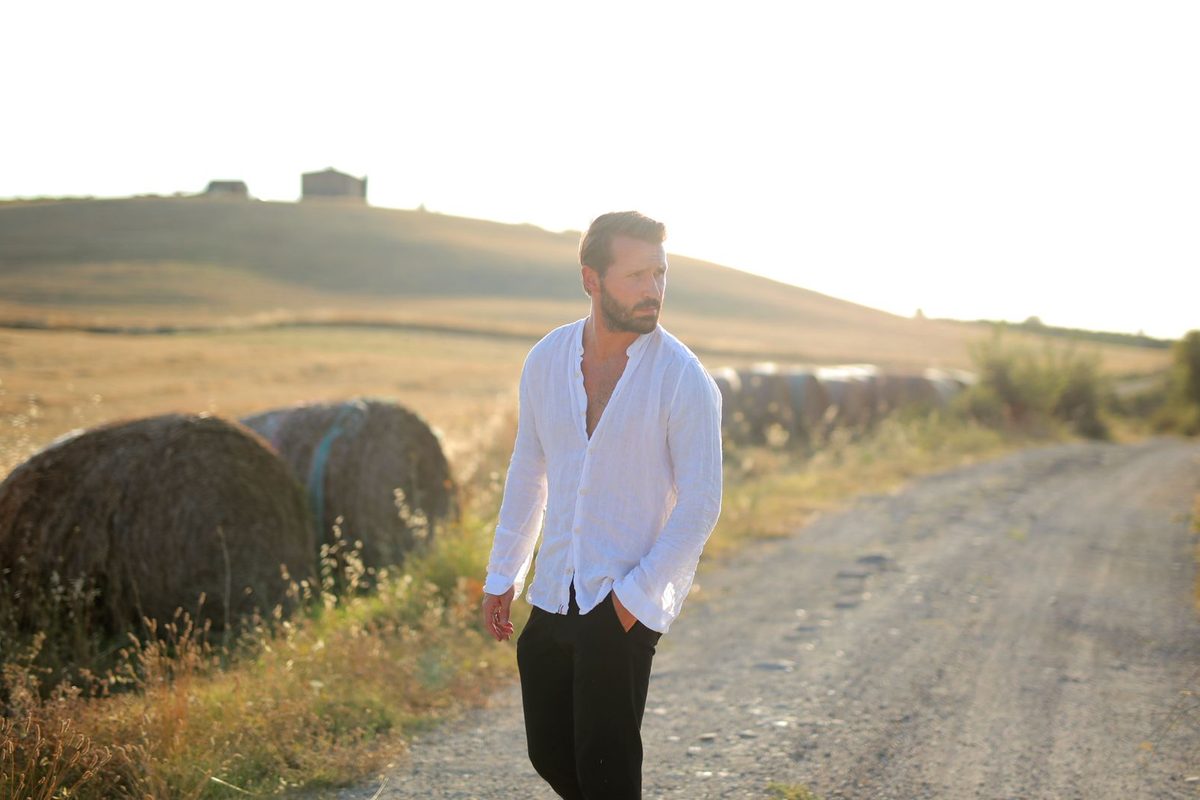
Valencia · since 2018
Our story
Three workshops within two hours of each other, 30 pieces, a few cloths, and a rule that nothing goes on sale before somebody here has worn it through a summer.
Three workshops within two hours of each other, 30 pieces, a few cloths, and a rule that nothing goes on sale before somebody here has worn it through a summer.
Sunloom Living began in 2018 with one complaint and one shirt. The complaint was that summer clothes were either thin and flimsy or made of cloth that looked like linen and behaved like plastic. The shirt was a band-collar linen one, cut from 175 gsm flax and washed after it was sewn, made in a sewing room in Alcoy that had been doing contract work for bigger labels for thirty years.
We sold it in two colours for a year before adding trousers. The range grew the way a wardrobe does: a pair of shorts because the trousers were too warm in August, a hat because the shirt was no use without one, an overshirt because the evenings were cooler than the days. Everything is still woven cloth - linen, cotton or the two together - and everything is still made within a few hours’ drive of the Valencian coast.
There are eleven of us, counting the person who answers the email.
 One summer, worn first
A new piece is made in three sizes and given to three people here to wear from May to September: to work, to the beach, in the wash at home with whatever detergent they already own. Nobody is told to be careful with it. At the end of the summer we lay the three garments next to a fresh one and write down what changed.
That list - how much it creased, whether it faded, whether a blend pilled at the cuffs, how much a hat’s brim softened - is what goes into the description on the product page. It is why the pages say things like “the ink colour will rub onto a white collar at first”. We would rather you knew.
Roughly one piece in four. Usually the cloth: a linen that went limp, a cotton that pilled, a blend that shrank unevenly between the body and the sleeve. Sometimes the cut: a wrap skirt whose overlap was too narrow for a windy day. The ones that fail are not sold off; they are unpicked and the cloth goes to the bucket hats.
The repair promise covers the two things that fail from making rather than wearing: seams and buttons. A seam that opens or a button that comes off within 3 years of delivery is sewn back at our cost, postage both ways. Fading, creasing, snags and holes from wear are not making faults, and we say so rather than promise more than we can keep.
That linen does not crease. That a cloth is “breathable” without a weight next to it. That anything is made to last indefinitely. If a claim cannot be checked against a number or a season of wear, it does not go on a product page.
All within two hours of Valencia, all visited every few weeks by one of us with a tape measure.
A sewing room in a former textile town that cuts and sews every linen and linen-cotton top, dress, skirt and overshirt. The flax is European, woven in northern Portugal, and washed in Alcoy after sewing.
A trouser specialist. Pleats, flies, waistbands and belt loops are a different trade from shirts, and this workshop has done nothing else for two generations.
Up the coast past Barcelona, a cotton mill town. The poplin shirts, the canvas trousers and shorts and the brushed twill overshirt are cut and sewn here, from cloth woven ten minutes away.
The straw hats are braided and blocked by a small hat workshop in the city, three streets from where the parcels are packed and the emails are answered.
Tell us whether you mind creases, how hot it gets where you are, and whether you own an iron. Those three answers pick the cloth, and we will say which - including when it is the cheaper one.
Write to us